
How Long Does It Take to Ghostwrite a Book? A Realistic Timeline
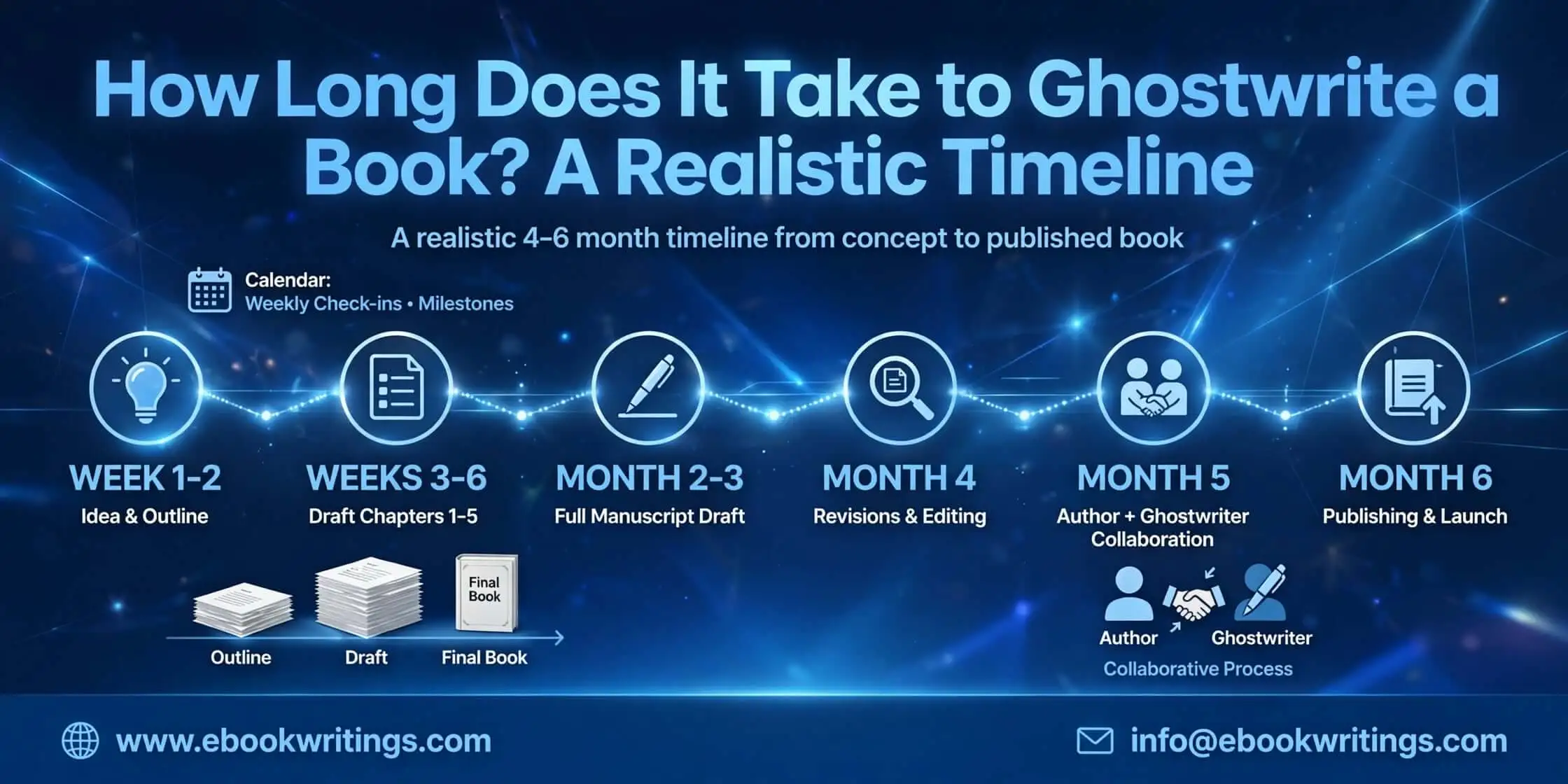
You might have a book idea in your head, a few notes on a piece of paper or indeed years of experience that you’d like to pass on to readers. But turning that into a proper book is a whole lot more than just finding someone to write it down. You’ve got to have the conversations, you’ve got to plan the chapters, you’ve got to go through a whole series of drafts before you’ve actually got a book.
A short ebook can take a few weeks, a full length book can take several months. The book ghostwriting timeline will vary depending on the type of book, the amount of research required and the amount of time you have for feedback and revisions.
What Is Book Ghostwriting?
Book ghostwriting is when a professional writer writes a book for someone else. The person who hires the writer is the named author and the writer works in the background to turn their ideas and experiences into a book.
The writer typically begins by getting to know the author – their background, their knowledge, their way of writing. This is done through a range of sources – recorded interviews, existing notes, business correspondence, an early manuscript etc. The object is to write a book that is in the author’s voice.
The author also has a part to play in that they need to be sharing information, going through the chapters, checking the facts and making corrections where necessary. That process goes on throughout the project.
How Long Does It Normally Take to Ghostwrite a Book?
A short ebook of 10k-15k words will take 4-6 weeks if the subject is well defined and there’s sufficient material to work from. A full length business book or memoir can take 6-9 months. Books that require a lot of research, numerous interviews and a lot of fact checking can take a year or more.
Here is a general idea of how long different projects may take:
| Book type | Typical timeline |
| Short ebook (10,000 to 15,000 words) | 4 to 6 weeks |
| Self-help or thought leadership | 4 to 6 months |
| Memoir or business book | 6 to 9 months |
| Research-heavy book | 9 to 12+ months |
These are planning estimates rather than firm deadlines. A shorter book may be written and completed in a matter of weeks if the material is ready.
A longer book can of course take much longer if there are still interviews to do, research to do or revisions to do. Ebook writers can often deliver a short title in four to six weeks when the topic is settled and feedback comes back quickly.
What Are the Main Stages of the Ghostwriting Process?
A book doesn’t normally go straight from a first conversation to a finished manuscript. You need to get to grips with the project, structure the material and agree on how the book is going to progress through the process. Each stage has its own purpose.
Initial Consultation and Planning
The initial conversations are all about working out what the author wants to write. They go over the subject matter, the intended reader, the length of the book, the main points etc. Any existing notes, recordings, drafts etc are all looked at. A client’s own outline or draft can help the writer start sooner.
If you’re working with a ghostwriting company this is when you go into detail about the project scope, what’s expected of you and what’s expected of the writer, and the delivery date.
Research and Interviews
Once the project is clear the writer starts to do the research. For a memoir that could be a number of conversations with people about their experiences and their recollections of key events. A business book might require company records, examples, customer stories, industry information etc.
Some books require more research than others and the writer will need to check the facts and verify the details prior to using them in the manuscript.
Creating the Book Outline
Prior to writing the chapters themselves the writer will produce an outline which shows how the book is going to be structured. That gives the author the opportunity to go through the order of the topics and make any necessary alterations before the writing starts.
Getting the structure right at this stage will save you time later on, particularly if the book is going to cover a number of different subjects.
Writing the Chapters
This is normally the longest phase of the project. The writer takes the approved outline and writes out the full chapters, sharing drafts with the author for review.
The author goes through each section and picks out anything that needs clarifying or doesn’t quite sound right. The writer then makes the agreed changes and moves on.
Editing and Final Delivery
Once all the chapters have been drafted the manuscript is then reviewed as a full book. The writer looks at the flow between the chapters, checks for any duplicated information, verifies names, dates and all the other key details.
The manuscript goes through a final proofing stage before delivery once all the revisions are completed. The later stages are cover design, formatting, printing and publication.
Sometimes writers start with the early chapters while searching for an expert. Stages can overlap but it eventually reduces the book ghostwriting timeline once all the stages are added together.
What Slows a Ghostwriting Project Down
Even if a project starts off with a very clear plan the delivery date can still move. Some of the delays are down to the writing itself, some are down to the author’s own schedule.
For instance a writer might send over three chapters for review and the author may take a while to get around to reading them and sending back comments. Interviews can also be put off, leaving the writer without material for the next chapters.
Changes to the book’s subject or structure take up more time as well. If several finished chapters need rewriting, the original timeline is likely to slip. Research intensive projects can be just as prone to this with the need to go back and check information. When two or three of these pile up, even a well-planned book ghostwriting timeline slips.
Faster Timelines Are Possible, With Limits
Yes some projects can be delivered sooner than anticipated. A short book on a clear subject with readily available source material and an author who is available is going to be a quicker project to complete.
Some writers will also offer a rush service for clients who have a fixed deadline. A tighter schedule doesn’t in any way get rid of the need for interviews, chapter reviews and editing. Rushing through every stage can mean that you end up with a manuscript that’s missing key bits or simply doesn’t have enough time for proper revision.
If you’ve got a launch date or an event on the horizon then please do let the writer know about that prior to the project starting. Gives both of you a chance to assess whether that deadline is actually achievable.
Keeping Your Ghostwriting Project on Schedule
The ghostwriter’s involvement can make a huge difference to the timeline and also check green and red flags when hiring a ghostwriter. If you’ve got your material ready and you’re able to make time for regular discussions then the writer can carry on without any undue delay.
A few simple arrangements can keep things moving:
- Keep your notes, your recordings and all your existing documents in one place.
- Schedule the interviews prior to writing commencing.
- Read the chapter drafts and provide feedback in the agreed time.
- Share the corrections together rather than sending separate comments over several days.
- Agree on the book structure and the number of revision rounds prior to actually starting to draft.
It’s also useful to include key dates in the agreement because they make it easy to identify where the project stands and which aspects require more attention.
Common Questions About Ghostwriting Timeline For A Book
Does it cost more when a book is longer than usual?
More words mean more interviews, detailed drafting and excessive re-drafting. Fees are usually based on word count or project scope. A 30k-word book and an 80k-word book are very different projects.
Can the timeline be changed during the course of the project?
It can. Adding chapters, changing the focus of the book, or realizing a topic needs more research will all affect the dates. In those cases, ask the writer to confirm the new delivery date in writing and update the book ghostwriting timeline before any further drafting takes place.
How much of my time does the project actually require?
Interviews take the most time at the start. After that, you review each batch of chapters, and the writer waits for your comments before the next one. Plan a few hours of reading for each batch.
What if I actually need to put the project on hold?
Tell the writer as soon as you can. A lot of writers are working on several books at once, so a break could well mean you have to wait until they have a free slot when you come back. Agreeing a restart date before you take a break will prevent the book from going cold.
Getting Your Timeline Started
Every book starts with a first conversation. You talk about the idea you’ve got, the date you’re hoping for and the notes or recordings you already have.
From there, the writer can look at your word count and your material and provide you with a book ghostwriting timeline that’s specific to your project rather than a generic one. If you’ve got a launch date or an event already on your calendar then just mention that in the initial conversation so the timeline can be built around that from the outset.

I am a content creator who believes ebooks are platforms for ideas. My blog dives into ebook writing, publishing strategies, and the culture of digital reading. Here you can explores how ebooks educate, inspire, and change the way we share knowledge online.