
10 Red Flags To Watch Out For When Hiring A Book Ghostwriter
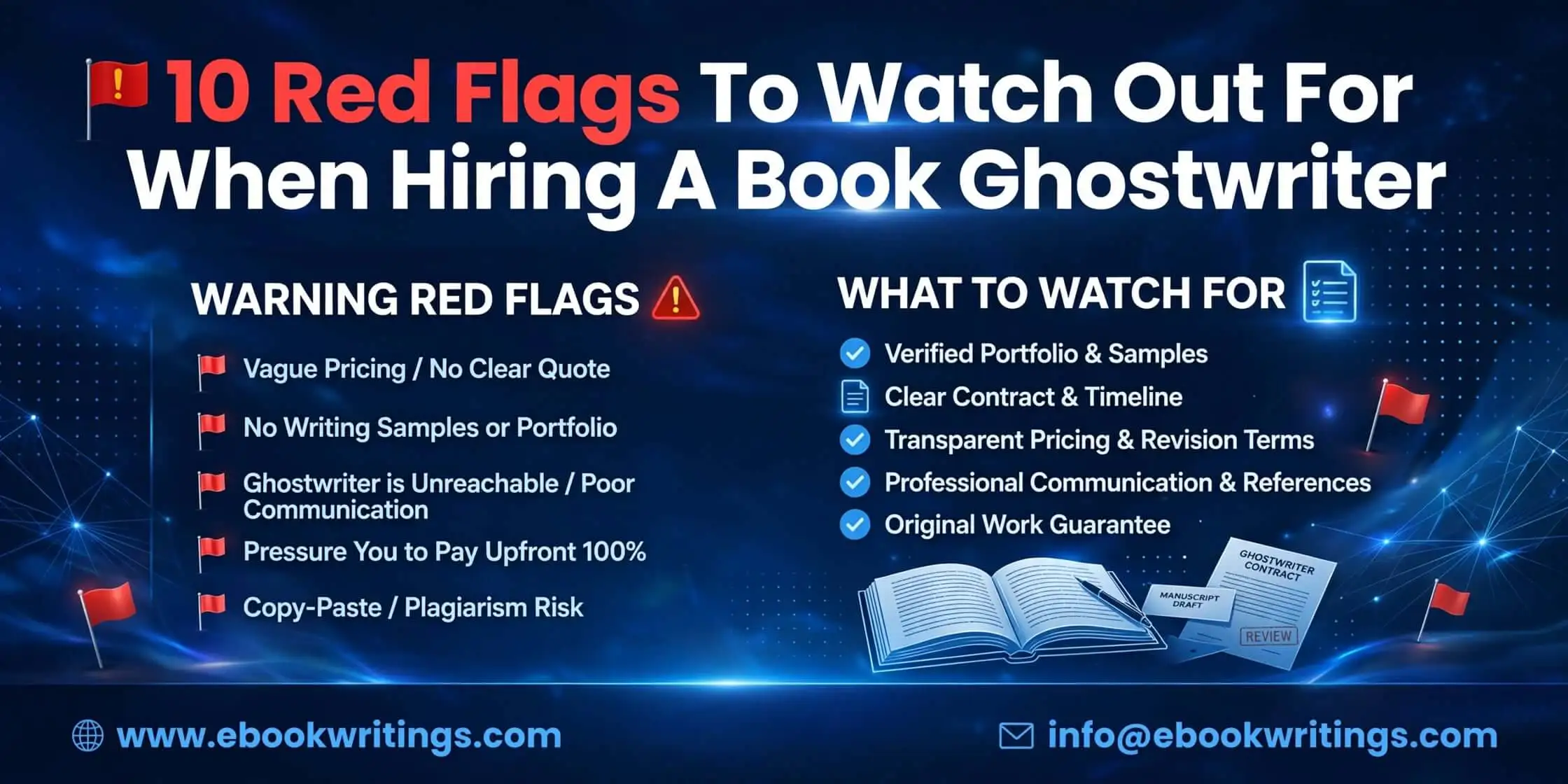
Every great book starts with an idea, but turning that idea into a compelling manuscript takes skill, patience and experience. This is why many aspiring authors hire professional ghostwriters. The challenge is to find someone who can genuinely capture your voice and deliver a quality book is not always easy.
If you recognize the red flags when hiring a ghostwriter, it can save you from wasted money, missed deadlines and disappointing results. Here are ten warning signs to take seriously before you sign an agreement.
Red Flags When Hiring A Ghostwriter
A professional ghostwriter can bring more than writing skills to the table. They should understand your vision, communicate clearly and respect your expectations. You should watch out for these red flags when hiring a ghostwriter.
1. No Relevant Writing Portfolio
A writer who cannot show previous work makes it difficult to judge their abilities. You should ask for published books, writing samples or anonymized client projects. Must look for experience in your preferred genre. Someone who is excellent at writing blog posts may not necessarily know how to structure a 60,000 words nonfiction book.
2. Unrealistic Promises
Promises of guaranteed bestseller status, instant publishing success or millions of readers deserve skepticism. A ghostwriter need to control the manuscript, not market demand. According to publishing ofthe Authors Guild scam alerts, unrealistic promises and demands for additional payments have featured in reported author scams.
3. Low Pricing
Affordable services is not suspicious, but unusual cheap quotes deserve closer inspection. A professional book needs research, interviews, drafting, revisions and careful editing. You should compare proposals instead of choosing the lowest price. A reliable ebook writing company and trusted ebook writers should explain exactly what its package includes.
4. Poor Communication Skills
Communication is crucial throughout a writing project. If a potential ghostwriter takes days to answer basic questions, ignores instructions or struggles to understand your concept, you should imagine dealing with that for several months. You must choose someone who listens carefully and explains their process without making everything unnecessarily complicated.
5. No Clear Contract Or Ownership Terms
You should never begin a substantial project according to verbal promises. Your agreement should contain payment schedules, confidentiality, copyright ownership, deadlines, revision limits and termination conditions. Ensure you confirm when ghostwriters will transfer you manuscript rights. If you have an experienced publishing lawyer, it can review unclear clauses.
6. No Research Or Interview Process
A ghostwriter cannot accurately communicate your experiences without understanding your background. They should ask meaningful questions, arrange interviews and verify important details. You should be cautious of anyone promising a complete, personalized manuscript after a brief conversation.
7. Refusal To Provide Client References
It is useful to have testimonials on a website, but independently verified references offer stronger reassurance. You should ask their previous clients to tell about their experience. If the writer refuses every reasonable verification request, you should consider it a warning sign.
8. Unclear Use Of AI Tools
AI policies deserve particular attention in modern publishing like human ghostwriter vs AI. You should ask to know the writer uses AI for research, outlining, editing or generating manuscript content. The 2025 Ghostwriting Industry Report highlights growing concerns about transparency and AI generated writing. It is better to make expectations explicit in your contract.
9. No Structured Revision Process
A first draft cannot always capture everything perfectly. Professional writers should establish feedback rounds, review milestones and reasonable revision limits. Someone who refuses meaningful changes or becomes defensive whenever you offer feedback may create unnecessary problems.
10. Demanding Full Payment Upfront
It is a considerable financial risk to pay the entire project fee before seeing any work. You should agree on milestone-based payments instead. For example, divide payments between the outline, first draft, completed chapters and final manuscript.
Steps To Hire The Right Book Ghostwriter
It can become easier to find a trustworthy professional when you follow a consistent evaluation process. You should take your time before making a financial commitment.
1. Define Your Book Requirements
You should decide your genre, target audience, approximate word count and publishing goals. If you have a clear brief, it can help potential writers to understand the project and provide realistic quotations.
2. Shortlist Experienced Candidates
You need to research portfolios, client feedback, published titles and relevant industry experience. If you also need publishing support, you should distinguish writing expertise from additional services such as Wikipedia page creation services.
3. Conduct An Interview
You should discuss their research methods, availability, writing process, revision policy and communication preferences. It is best to ask practical questions instead of relying entirely on sales presentations.
4. Review The Proposal And Contract
You should compare pricing, payment milestones, deliverables, confidentiality provisions and ownership terms. It is best to get everything in writing before you authorize work.
5. Start With Small Milestones
You must consider to approve a sample chapter or detailed outline first. This can give you an opportunity to evaluate writing quality, voice and collaboration before committing to the entire manuscript.
Frequently Asked Questions
How much does hiring a book ghostwriter typically cost?
The price of the ghostwriting depends on the experience of the writer, manuscript length, research requirements and genre. Some of them charge a fixed project fee, and others work hourly. You should request several detailed quotations and compare deliverables before deciding.
How much time does it take to ghostwrite a book?
A full-length book can take several months, that depend on complexity, interviews, research and revision requirements. You should agree on a realistic timeline with regular progress updates before starting.
Should I sign an NDA with my ghostwriter?
An NDA can help you to protect confidential business information, personal stories and unpublished ideas. You should discuss confidentiality requirements before sharing sensitive material and make sure the agreement clearly explains what information is protected.
Who owns the copyright to a ghostwritten book?
Ownership of the copyright depends on the applicable copyright laws and contractual arrangements. Your agreement should clearly address copyright, usage rights and ownership transfers. You should consult a qualified intellectual property lawyer for jurisdiction specific advice.
Can I change ghostwriters if I am unhappy with the work?
Yes, a change of ghostwriters depends on your agreement. You should review termination clauses, completed work, payment obligations and rights to existing drafts. Clear contractual exit provisions can help you to prevent disputes if the collaboration does not work out.
Conclusion
When it comes to hire a book ghostwriter, it is an important investment in your ideas and publishing goals. You should never ignore the red flags when hiring a ghostwriter, especially when money, ownership and creative control are involved. Must check portfolios, verify references, ask questions and establish clear contractual terms. A good working relationship depends on trust and transparency. Ensure you take your time, evaluate your options carefully and choose someone who can turn your vision into a book worth reading.

I am a content creator who believes ebooks are platforms for ideas. My blog dives into ebook writing, publishing strategies, and the culture of digital reading. Here you can explores how ebooks educate, inspire, and change the way we share knowledge online.